

Noticing deeper folds, hollow temples, or sagging cheeks in the mirror? You're not alone. Facial aging steals volume from the inside out, and most fillers only mask the problem with temporary plumping. So what is Sculptra, and why is it different? This treatment takes a different approach because it rebuilds what time took away by reigniting your body's own collagen factory. If you're weighing long-term solutions that look natural and last, this guide walks you through everything you need to know.
What Is Sculptra and How Does It Differ From Regular Fillers?
Sculptra is a non-surgical injectable treatment that restores facial volume by stimulating collagen production deep within your skin. Unlike hyaluronic acid fillers that add immediate volume like filling a deflated balloon, Sculptra contains poly-L-lactic acid (PLLA), which is a biodegradable, biocompatible synthetic material that wakes up your body's natural collagen-building process.
Think of traditional dermal fillers as spackling a crack in the wall. Sculptra rebuilds the wall itself. The PLLA microparticles work beneath the surface, prompting your tissues to generate fresh collagen over several months. This gradual approach creates results that emerge naturally, without the overfilled look.
Sculptra is FDA-approved for treating facial wrinkles, deep folds, and volume loss. It is also used off-label for non-surgical butt lifts, though that requires significantly more product and specialized technique.
How Does Sculptra Stimulate Natural Collagen Production?
Once Sculptra is injected deep into the skin's dermal layer, the poly-L-lactic acid microparticles trigger a controlled inflammatory response. Your immune system recognizes these particles as foreign, and fibroblasts (the cells responsible for building connective tissue) rush to the site and start producing new collagen fibers.
This process unfolds slowly. New collagen production begins within weeks, but visible improvements typically emerge over three to six months as the scaffolding strengthens. The PLLA itself gradually breaks down and gets absorbed by your body, leaving behind only the fresh collagen it stimulated.
Results continue to build with each treatment session. Most patients need two to three sessions spaced four to eight weeks apart, allowing time for collagen synthesis between visits. Final results can take four to six months to fully develop, but the payoff is a natural restoration that can last up to two years or more.
How Does Sculptra Address the Root Cause of Facial Aging?
Facial aging isn't just about gravity pulling skin downward—it's about internal structural collapse. Starting in your mid-twenties, you lose roughly 1% of your collagen each year. By your forties and fifties, that depletion becomes visible as hollow temples, sunken cheeks, deeper nasolabial folds, marionette lines, and jowling along the jawline.
Sculptra addresses facial aging by rebuilding the collagen framework that keeps skin firm and full. Instead of simply filling a crease, it restores the underlying architecture. This means treating the cause (facial volume loss and collagen depletion) not just the symptom. Patients seeking Sculptra in Princeton and beyond choose this treatment precisely because it targets what's happening beneath the surface.

What Are the Key Benefits: Natural Beauty, Glowing Skin, and Longevity?
Sculptra's biggest advantage is subtlety. Because results build slowly, you avoid the sudden "I just had filler" appearance. Your face simply looks like a healthier, more rested version of itself. The progressive nature of Sculptra allows your features to settle into their improved state naturally.
Beyond volume, Sculptra improves skin quality. Increased collagen production means better skin tone and elasticity, which translates to glowing skin with diminished fine lines and a smoother texture. Many patients describe their skin as looking thicker and more resilient.
Longevity is another major advantage. While hyaluronic acid fillers typically last six to eighteen months, Sculptra results can last up to two years or more. That extended timeline means fewer appointments, less maintenance, and better long-term value.
How Does Sculptra Compare to Traditional Dermal Fillers?
Traditional dermal fillers like Juvéderm and Restylane use hyaluronic acid to add instant volume. You see the change immediately after your appointment. Sculptra stimulates your own tissues to create volume over time, so patience is required.
Another critical difference is that hyaluronic acid fillers can be dissolved with hyaluronidase if you're unhappy with the results. Sculptra cannot be instantly reversed because it doesn't fill space—it triggers your body to build tissue. Choosing an experienced healthcare provider is essential to avoid complications that can't be easily undone.
Ideal candidates for Sculptra are patients seeking gradual, natural-looking improvement who don't mind waiting months for full results. Those who want immediate correction for an upcoming event may prefer other fillers.
How Many Sculptra Treatments Are Needed to See Results?
Most patients typically need two to three treatment sessions to achieve their desired results. Each session builds on the last as collagen production accumulates in the treated areas.
Sessions are usually spaced approximately four to eight weeks apart. This interval gives your body time to respond to the PLLA and generate new collagen before the next round of stimulation. Rushing the process with back-to-back appointments won't speed up collagen synthesis; it just wastes product.
After completing the initial treatment series, maintenance treatments are minimal. Many patients maintain their results with just one vial per year, making Sculptra a low-maintenance option once the foundation is built.
How Many Vials of Sculptra Will You Need?
The number of vials required depends on several key factors: your age, the degree of volume loss, the treatment area, and your desired outcome. Younger patients with mild hollowing may need fewer vials, while older patients with significant facial volume loss often require more product to achieve optimal results.
On average, most patients use two to four vials per treatment session. A full face rejuvenation typically requires six to eight vials spread across the entire initial series.
Your healthcare provider will assess your facial contours during the consultation and create a tailored treatment plan. Some practices offer before-and-after galleries from actual patients, which can help set realistic expectations for how many vials you might need based on your starting point.

What's the Difference Between Facial and Butt Lift Vial Estimates?
For facial rejuvenation, typical vial ranges vary by area:
- Cheeks and temples: 1–2 vials per session
- Nasolabial folds and marionette lines: 1–2 vials per session
- Full face (multiple areas): 2–4 vials per session
A Sculptra butt lift is a different story. The non-surgical butt lift requires significantly more product because the treatment area is much larger. Most providers recommend 10 to 20 vials per session for buttock augmentation. Multiple sessions are usually necessary to build meaningful volume and contour.
It's important to note that buttock use is commonly off-label, meaning it's not FDA-approved for that specific indication. While many injectors perform the procedure safely, you should select a provider with extensive experience in body contouring and Sculptra injections outside the face.
What Influences Sculptra Cost and What Should You Expect to Pay?
Sculptra cost per vial typically ranges from $600 to $1,200, with most reputable clinics charging between $700 and $1,000. The variation reflects geographic location, provider expertise, clinic overhead, and included services like follow-up visits.
The average total cost for a complete Sculptra treatment series is about $2,127, but extensive treatments, especially full-face rejuvenation or butt lifts, can reach $6,000 or more. Total treatment costs depend on how many vials and sessions you need.
Key factors that affect final price include:
- Provider expertise
- Geographic location: Urban areas and high-cost-of-living markets command higher prices.
- Number of vials and sessions: More product and more visits mean higher total investment.
- Treatment area: A butt lift costs far more than treating smile lines due to the sheer volume required.
Always ask whether consultation fees and follow-up appointments are included in the quoted price, or if they're billed separately.
What Does a Sculptra Butt Lift Involve?
A non-surgical butt lift using Sculptra aims to add subtle volume and improve the contour of the buttocks without surgery or implants. Sculptra is injected deep into the gluteal tissues, where it stimulates collagen production to gradually lift and shape the area.
Typical estimates call for 10 to 20 vials per session, often requiring two to three sessions spaced several weeks apart. The total investment can easily exceed $10,000, making it one of the more expensive cosmetic procedures using Sculptra.
Because the technique is off-label and the anatomy is complex, choosing an experienced injector is critical. Look for a healthcare provider who can show you before-and-after photos of actual patients they've treated and who understands the biomechanics of gluteal contouring.
What Happens During the Treatment Journey: Consultation, Preparation, and Aftercare?
Your consultation should cover your aesthetic goals, medical history, current skin condition, and realistic expectations. The provider will assess your facial contours (or body area) and recommend how many vials and sessions you'll need. Ask to see before-and-after galleries and discuss what final results might look like for your unique anatomy.
Pre-treatment preparation is straightforward. Avoid blood-thinning medications and supplements like aspirin, ibuprofen, and fish oil for at least a week before your appointment to reduce bruising. Arrive with clean skin, which means having no makeup on the treatment area.
Most patients report minimal discomfort during the treatment thanks to topical numbing cream applied beforehand. Sculptra is injected deep into the dermal layer using a fine needle or cannula, and the entire session typically takes 30 to 45 minutes.
Aftercare is where Sculptra differs from other fillers. Follow the "5-5-5 Rule": massage the treated area for five minutes, five times a day, for five days. This ensures even distribution and prevents bumps or nodules from forming as the product settles. Common side effects include swelling, tenderness, redness, and bruising at the injection site, typically resolving within a few days.
Avoid strenuous exercise, saunas, and direct sun exposure for 24 to 48 hours. You can return to most normal activities immediately, though some patients prefer to schedule treatments on a Friday to allow weekend recovery.
What Are the Risks, Side Effects, and Safety Considerations?
Short-term side effects are common and usually mild. Expect some swelling, tenderness, redness, and bruising at the injection site. These typically resolve within a few days.
The more serious risk is nodule or granuloma formation, or the small bumps that can appear under the skin six to twelve months after treatment. These occur when Sculptra is injected too superficially, not massaged properly, or reconstituted incorrectly. Choosing an experienced injector and following the 5-5-5 massage protocol significantly reduces this risk.
Sculptra is contraindicated in certain patients. You should not receive Sculptra injections if you have:
- Active skin infections or inflammation at the treatment site
- A history of keloid scars or hypertrophic scarring
- Allergies to any Sculptra ingredients
Discuss your full medical history during your consultation to screen for any red flags.
FAQ and Key Takeaways
How long do Sculptra results last?
Results can last up to two years or more, significantly longer than traditional fillers. Individual longevity varies based on age, lifestyle, and metabolic factors.
What questions should I ask my healthcare provider before starting Sculptra?
Ask about their specific Sculptra experience, complication rates, whether they've treated patients with similar concerns, what the total cost will be including all sessions and follow-ups, and what their emergency protocol is for adverse events.
Can Sculptra really improve skin quality and create glowing skin?
Yes. By stimulating natural collagen production, Sculptra improves skin tone, elasticity, and texture. Many patients describe their skin as looking thicker, smoother, and more radiant.
Is Sculptra better than other fillers for long-term results?
Sculptra offers longer-lasting results than most hyaluronic acid fillers, but "better" depends on your goals. If you want immediate correction, other fillers may suit you. If you value gradual, natural beauty and extended longevity, Sculptra is hard to beat.
How much does a full Sculptra treatment series typically cost?
Most patients spend between $2,000 and $4,000 for a complete facial series. Butt lifts cost significantly more due to the higher number of vials required.
Ready to Restore Your Natural Glow?
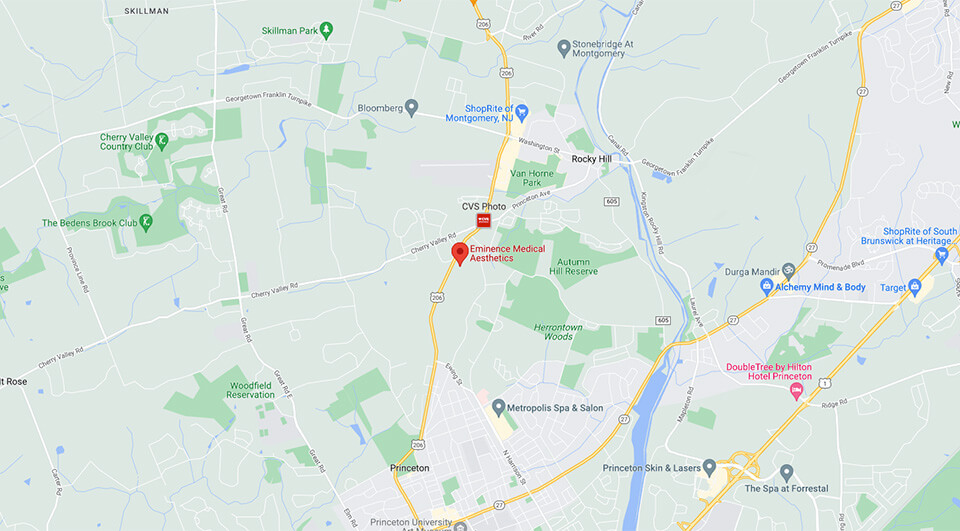
Schedule your consultation today at Eminence Medical Aesthetics, located at 707 State Road, Suite 221, Princeton, NJ 08540. Call us at (609) 616-9815 to book your appointment and start your journey to natural, lasting rejuvenation.